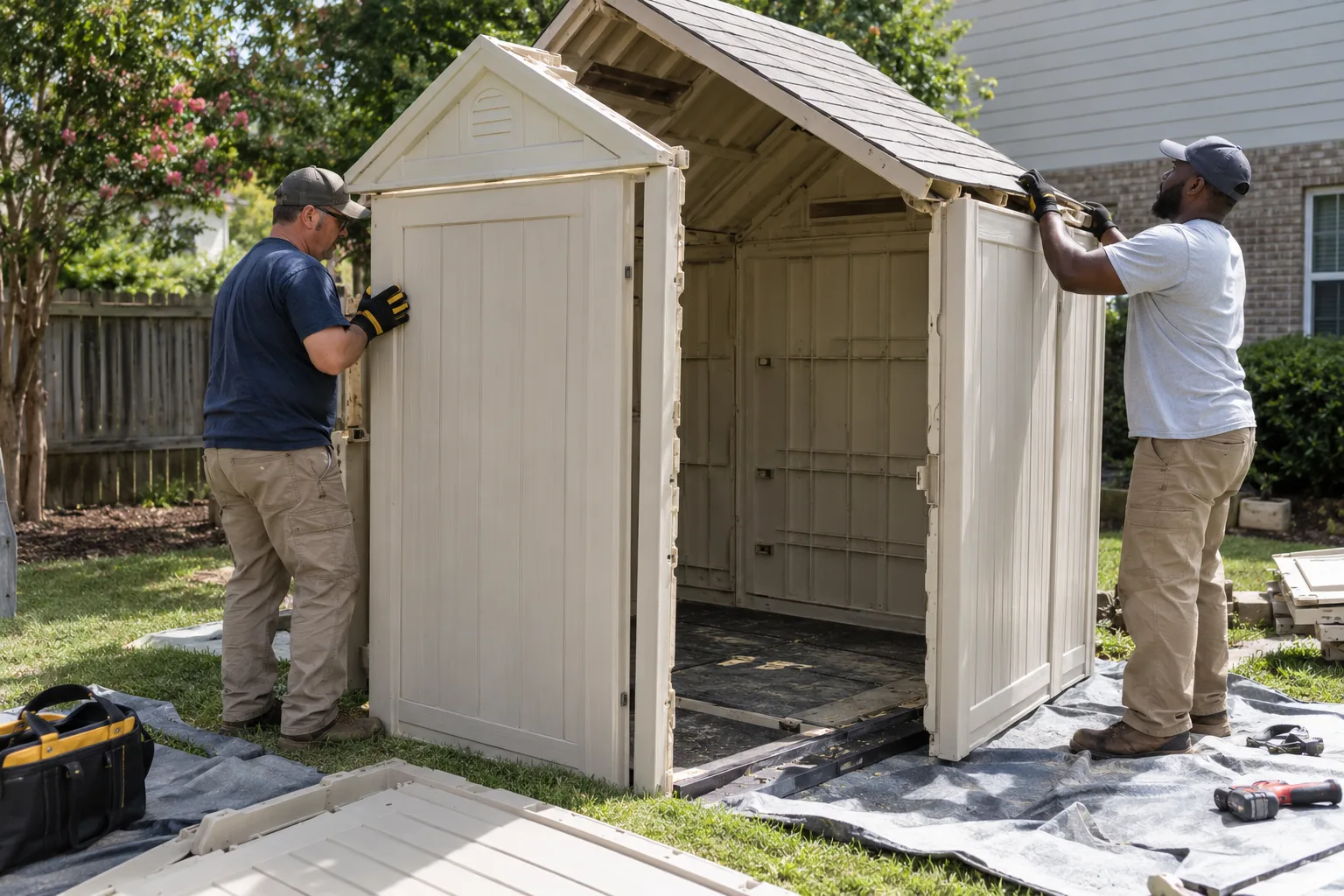
A useful estimate starts with the structure, its connections, and the route out. Record those three things before calling, and a provider can ask better questions without guessing from one distant photo.
Photograph how the panels connect
Show roof seams, corner joints, door tracks, floor edges, and visible screws or clips. Interlocking systems vary, and age can make tabs or panels brittle.
Empty contents by category
Separate keepers from accepted haul-away items and set aside paint, fuel, batteries, chemicals, and unknown liquids for the proper disposal path. Remove loose hooks and shelves only if it is safe.
Check the floor and anchors
Look for spikes, bolts, brackets, a wood platform, pavers, or a slab. Photograph each connection and include the base in the written scope rather than assuming it leaves with the panels.
Measure the panel route
Record gate width, turns, steps, and overhead clearance. Large molded panels may be light but awkward, so the route matters even when heavy equipment is not needed.
Know when the scope needs another trade
Stop and get the right specialist when the work involves active utilities, suspected asbestos, hazardous material, structural support for an occupied building, or conditions that cannot be assessed safely from stable ground. A removal estimate should name exclusions instead of hiding them.
For service scope and estimate factors, see Plastic & Resin Shed Removal. When you are ready, use the estimate planning guide before calling.