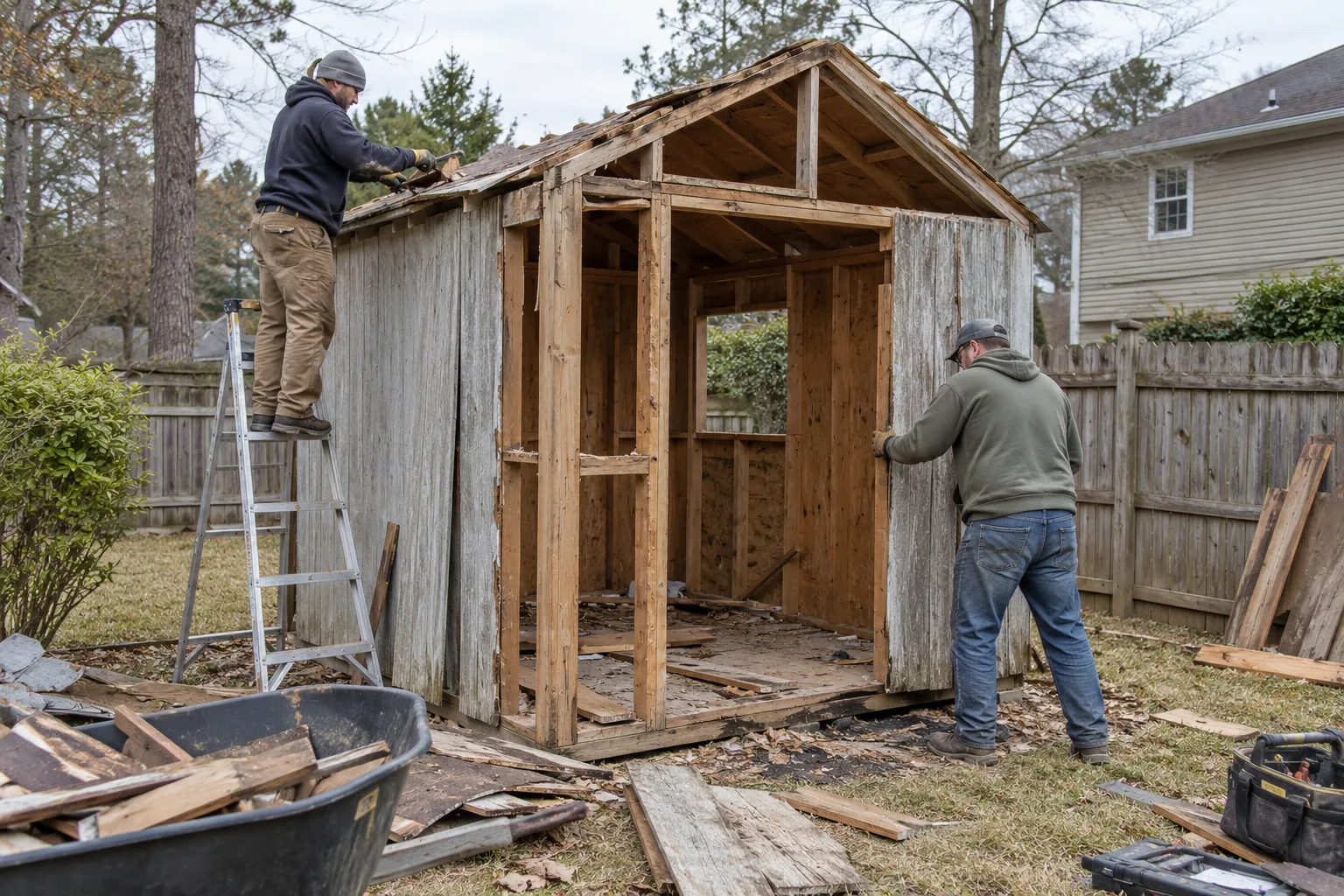
A useful estimate starts with the structure, its connections, and the route out. Record those three things before calling, and a provider can ask better questions without guessing from one distant photo.
Start with four exterior views
Photograph every side from a safe distance. Include the roofline, door opening, corners, nearby fence or landscaping, and enough ground to show how the shed is supported.
Show rot without testing it
Zoom in on soft siding, sagging roof sections, missing shingles, and floor damage. Do not step onto a weak floor or push a leaning wall to demonstrate movement.
Record attached and connected items
Point out lean-tos, ramps, shelves, gutters, wiring, lights, or piping. Utilities should be handled by the appropriate trade before demolition begins.
Define the base and finish condition
Show skids, blocks, piers, anchors, or a slab. State whether the base stays, leaves, or needs separate pricing, and describe what should remain after cleanup.
Know when the scope needs another trade
Stop and get the right specialist when the work involves active utilities, suspected asbestos, hazardous material, structural support for an occupied building, or conditions that cannot be assessed safely from stable ground. A removal estimate should name exclusions instead of hiding them.
For service scope and estimate factors, see Wood Shed Demolition. When you are ready, use the estimate planning guide before calling.